
Teeth grinding, also known as “bruxism,” is a condition in which your child grinds or clenches his or her teeth together. Children often, but not always, grind their teeth while sleeping and may not be aware they are doing it; it is frequently a subconscious behavior.
Sometimes you may hear your child’s teeth grinding against each other during sleep, but bruxism can also be a silent behavior. Although teeth grinding is often a temporary condition and relatively harmless, if it persists and remains untreated, it can contribute to oral health problems later in childhood.
At Ironwood Pediatric Dentistry, we can help you recognize the signs of teeth grinding and provide treatment for your child. In this post, we cover:
- The signs to look for that suggest teeth grinding is occurring
- Why some children grind their teeth
- The effects of persistent or severe untreated teeth grinding
- Treatment options for teeth grinding
- Whether teeth grinding can be prevented
If you believe that your child is being affected by teeth grinding, you can call our dental office at (480) 422-4544 or contact us online to speak with one of our child dentists.
What are the Signs and Symptoms of Teeth Grinding?
As we mentioned in the introduction to this post, your first awareness of your child’s teeth grinding may be hearing it, usually at night while your child is asleep. But there are other indications that teeth grinding is going on. Here are some signs to look for:
- Worn, flattened, or chipped teeth
- Jaw soreness, headaches, or facial pain, especially in the morning
- Tooth sensitivity or complaints of pain when chewing
- Sleep disorders that manifest through daytime fatigue, frequent waking up at night, reduced attention span, heightened irritability, and decreased performance in schoolwork
If you take your child to the dentist regularly, your pediatric dentist can also recognize signs of teeth grinding, such as worn tooth surfaces or unexplained cracked teeth, and, in some cases, observe the effects of jaw muscle tension.
If the dentist suspects that tooth damage or jaw problems exist, dental X‑rays may help reveal hidden tooth fractures or bone changes, and evaluate your child’s jaw structure and tooth alignment.
Understanding these signs and symptoms is important because early detection of teeth grinding can lead to earlier treatment, which, in turn, can help prevent more serious oral health conditions later.
Why Do Some Children Grind Their Teeth?
Children grind their teeth for a variety of reasons. Some of these risk factors are physical, and others can have a psychological origin.
Physical Causes of Teeth Grinding
Your child’s growth can contribute to bruxism naturally. As new teeth begin to erupt in the mouth, for example, your child may unconsciously grind his or her teeth to help them settle into position. This kind of tooth grinding usually resolves on its own as your child grows older.
Other times, tooth misalignment can cause oral discomfort, leading to teeth grinding. And for some children, other physical causes can come from medical conditions like sleep apnea, a hyperactivity disorder, or side effects from certain medications, or a neurological condition.
Psychological Causes of Teeth Grinding
In some cases, your child may suffer from stress, anxiety, or changes in life, like starting a new school or experiencing a family transition. These stressors can trigger bruxism in children. Some children process stress physically, leading to nighttime grinding as a subconscious way to release tension.
What Are Possible Effects of Persistent or Severe Untreated Teeth Grinding?
In some cases, teeth grinding is a temporary phase your child goes through that does not require special treatment. Other times, however, chronic teeth grinding can lead to serious oral health issues, including:
- Damaged tooth enamel on chewing surfaces
- Increased risk of tooth decay
- Cracked teeth
- Difficulty chewing food
- Chronic jaw pain
- Speech problems
- Temporomandibular joint (TMJ) disorders
Treatment Options for Teeth Grinding in Children
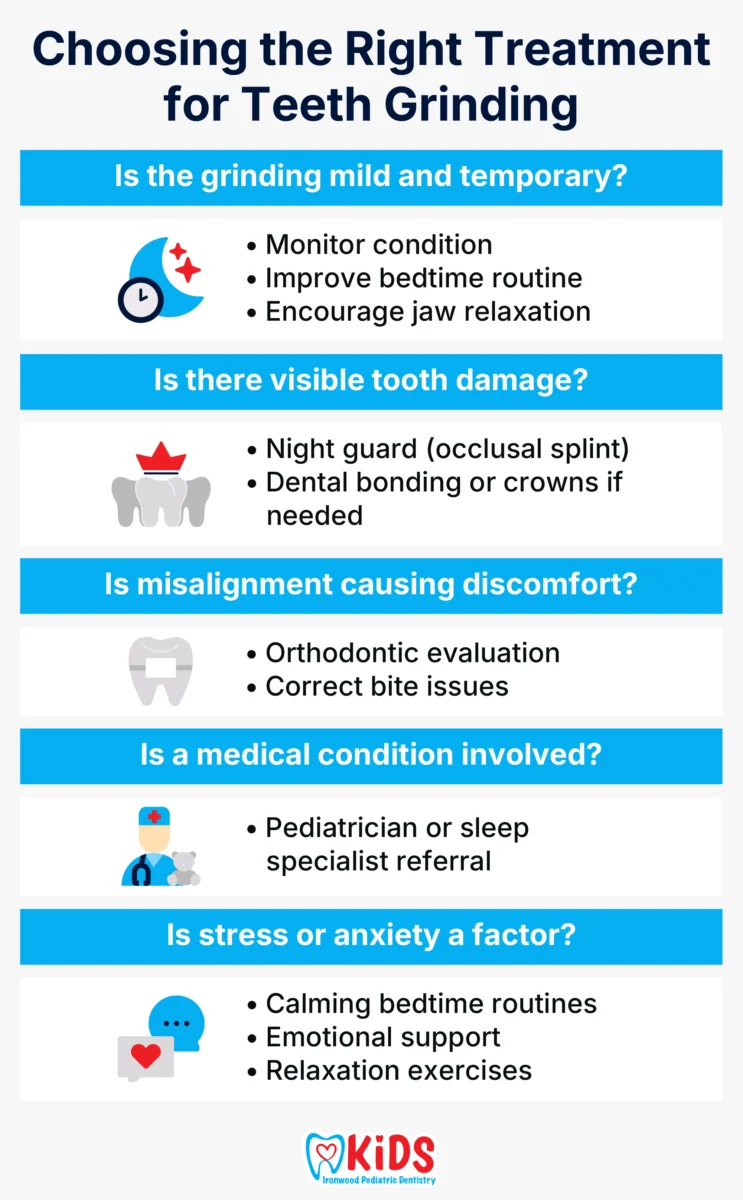
Treatment options for teeth grinding vary depending on the severity of the condition and its cause. Each treatment plan should be customized, considering your child’s comfort, age, and overall health.
A common treatment for older children is an occlusal splint, also known as a night guard or mouth guard. This device fits over your child’s teeth and prevents contact between the upper and lower teeth.
If tooth damage has already occurred, then more involved dental treatment can include dental bonding or crowns to protect the integrity of the affected teeth.
If malocclusion is the cause of teeth grinding, orthodontic treatment may be necessary to correct the underlying tooth misalignment.
If teeth grinding occurs due to a medical condition such as sleep apnea, a pediatrician or sleep specialist may help develop a comprehensive treatment plan for your child.
For teeth grinding related to stress or anxiety, it is important to consider what the underlying emotional factors are and to find ways to address them. This can range from establishing calming bedtime routines that minimize sleep problems to using jaw relaxation exercises.
Can Teeth Grinding Be Prevented?
In some cases, depending on the causes of teeth grinding, you may be able to help address these causes to reduce dental damage or possibly prevent it from starting.
Some methods that can be beneficial include:
- Maintaining a consistent bedtime routine to reduce stress and promote restful sleep
- Limiting sugary foods or caffeine, particularly in the late afternoon and evening
- Making sure your child eats a balanced diet to foster better oral health
How Your Pediatric Dentist Can Help Avoid Teeth Grinding
Your child’s dentist can play an important role in detecting the early signs of bruxism, especially if you bring your child in for regular dental checkups. At Ironwood Pediatric Dentistry, our dentists have the training and experience to identify triggers of this condition and can offer guidance on how you can help your child reduce teeth grinding.
If you have noticed early signs of teeth grinding in your child, you can reach our Scottsdale dental offices by calling (480) 422-4544 to speak with one of our experienced pediatric dentists. You can also reach out to us by using our online contact form.