A child dental abscess is a serious infection that develops when bacteria enter the inside of a tooth or the surrounding gums. While it may begin with a toothache or swollen gums, an abscessed tooth can quickly become painful and may lead to more serious health problems if left untreated.
If you think your child has a dental abscess or an abscessed tooth, prompt care is important. Ironwood Pediatric Dentistry provides compassionate, personalized care for children of all ages and proudly accepts AHCCCS and Medicaid.
Call (480) 422-4544 to schedule an appointment.
What Is a Child Dental Abscess?
A child dental abscess is a pocket of pus caused by a bacterial infection. The infection may develop inside the pulp of the tooth or spread into the surrounding gums and tissues.
A child dental abscess may develop after untreated cavities, dental injuries, or bacteria entering the tooth through a crack or damaged filling. As the infection grows, pressure builds inside the tooth or gums, often causing significant discomfort.
Parents may also hear terms such as abscessed gums, abscessed tooth, or dental abscess. While the names vary, they all describe infections that require professional evaluation.
What Causes a Dental Abscess in Children?
Several conditions can allow bacteria to reach the inside of a tooth.
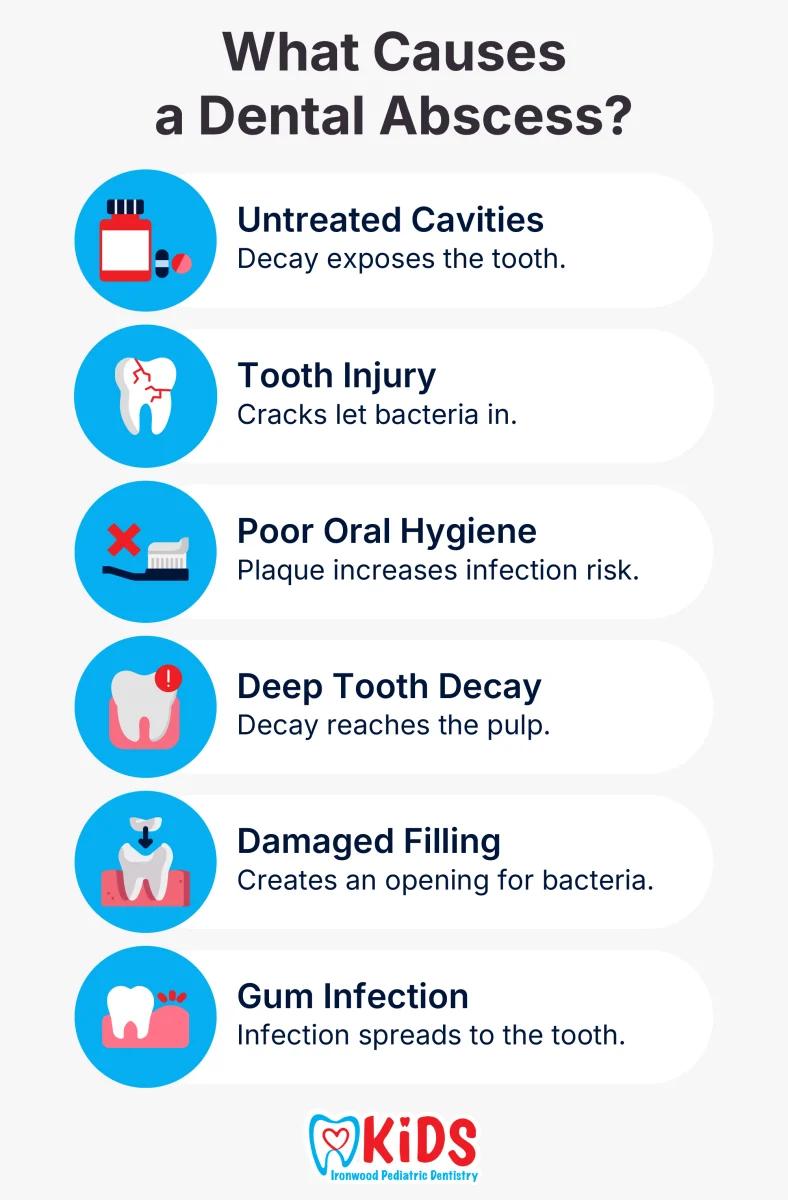
Common causes include:
- Untreated cavities
- Tooth injuries or fractures
- Poor oral hygiene
- Deep tooth decay
- Damaged dental restorations
- Gum infections
Once bacteria reach the pulp, the infection can spread into the surrounding tissues and create an abscess.
Symptoms of a Child Dental Abscess
Symptoms may appear suddenly or worsen over several days.
Common signs include:
- Severe toothache or throbbing pain
- Swollen gums
- Redness around the affected tooth
- Swelling of the face or jaw
- Sensitivity to hot or cold foods and drinks
- Pain while chewing
- Pus draining from the gums
- A bad taste in the mouth
- Fever
- Swollen lymph nodes in the neck
Some children also develop what parents describe as a toddler gum boil, which is a small bump on the gums that allows pus to drain from the infection.
If your child has an abscessed tooth with facial swelling, fever, or difficulty swallowing or breathing, seek immediate medical care.
Is an Abscess an Emergency?
A child dental abscess should always be evaluated promptly by a dentist because the infection will not go away on its own.
If the infection spreads beyond the tooth into the jaw, neck, or other parts of the body, it can become much more serious. Seek immediate medical care if your child has:
- Swelling of the face or jaw, especially if it is increasing
- Difficulty breathing
- Difficulty swallowing
- Fever
- Severe pain that is getting worse
These symptoms may require emergency medical treatment in addition to dental care.
How Is a Child’s Dental Abscess Diagnosed?
Your child’s dentist will perform a thorough examination to determine the source of the infection.
Diagnosis may include:
- A visual examination
- Dental X-rays
- Evaluation of swelling
- Testing the affected tooth
- Reviewing your child’s symptoms
This evaluation helps determine how far the infection has spread and which treatment is most appropriate.
Child Gum Abscess Treatment
Child gum abscess treatment depends on the location and severity of the infection.
Draining the Abscess
If pus has collected around the tooth or gums, the dentist may gently drain the abscess to reduce pressure and remove the pus.
Antibiotics
Antibiotics may be prescribed if the infection has spread beyond the tooth or if significant swelling is present.
While antibiotics help control bacteria, they usually do not eliminate the source of the infection by themselves. Additional dental treatment is often necessary.
Root Canal Treatment
If the permanent tooth can be saved, a root canal may remove the infected pulp while preserving the tooth.
Not every child with an abscessed tooth will need a root canal. The recommendation depends on your child’s age, the affected tooth, and the extent of the infection.
Tooth Removal
Sometimes an abscessed primary tooth cannot be saved safely.
If necessary, the dentist may recommend removing the affected tooth to prevent the infection from spreading and protect the developing permanent teeth.
Can a Dental Abscess Go Away on Its Own?
No.
Although an abscess may temporarily stop hurting if it begins draining, the underlying infection remains. Without treatment, bacteria can continue spreading through the surrounding tissues.
Home remedies may temporarily reduce discomfort but cannot cure a dental abscess.
How Can Parents Help at Home?
While waiting for your child’s appointment:
- Offer soft foods if chewing is painful.
- Encourage gentle brushing around the affected area.
- Have your child rinse with warm salt water if they are old enough.
- Use children’s pain medication only as directed by your healthcare provider.
- Avoid giving your child aspirin or placing it directly on the gums.
Do not attempt to pop or drain the abscess yourself.
Preventing Dental Abscesses
Many dental abscesses can be prevented through good oral health habits.
Parents can help by encouraging children to:
- Brush twice each day with fluoride toothpaste.
- Floss every day.
- Limit sugary foods and drinks.
- Attend regular dental checkups.
- Treat cavities before they become severe.
Routine preventive care allows dentists to identify problems early before an infection develops.
When Should You Call a Dentist?
Schedule an appointment if your child develops:
- An abscessed tooth
- Swollen or painful gums
- Persistent tooth pain
- Facial swelling
- Pus around the tooth
- A fever along with dental pain
- A bad taste in the mouth that does not improve
Facial swelling, a fever, or any difficulty swallowing or breathing needs immediate medical care rather than a scheduled appointment. Prompt treatment often helps relieve pain, stop the infection, and preserve healthy teeth whenever possible.
Contact Ironwood Pediatric Dentistry
A child dental abscess is more than a painful toothache. Without treatment, the infection can spread and affect your child’s oral health and overall health. Early care gives your child the best opportunity for a comfortable recovery while protecting their developing smile.
Ironwood Pediatric Dentistry provides gentle, personalized treatment for children with dental abscesses, tooth infections, cavities, and other pediatric dental concerns. We proudly accept AHCCCS and Medicaid and are committed to helping every child receive the care they need in a welcoming environment.
Call Ironwood Pediatric Dentistry today at (480) 422-4544 to schedule your child’s appointment.