A toddler’s chipped tooth can happen in an instant — a fall while learning to walk, a collision during play, or a tumble off a playground structure. If it just happened, stay calm, rinse your child’s mouth with warm water, gently check for bleeding, save any tooth fragments, and call a pediatric dentist to have the tooth evaluated.
Most chipped baby teeth can be managed safely, but even a small chip can involve the dentin (the second layer of tooth) or pulp (the nerve), so it’s worth a prompt look.
Although chipped baby teeth are common, parents should not assume the injury is minor—some fractures are deeper than they look from the outside.
Prompt evaluation by a pediatric dentist can help determine whether treatment is needed and whether the injury could affect the developing permanent tooth.
If your child chips a tooth, contact Ironwood Pediatric Dentistry at (480) 422-4544 to schedule an appointment with a pediatric dentist today.
What Should You Do Immediately After a Toddler Chips a Tooth?
The first few minutes after a dental injury are often stressful for parents and children alike. Fortunately, most chipped baby teeth can be managed safely until your child can be evaluated.
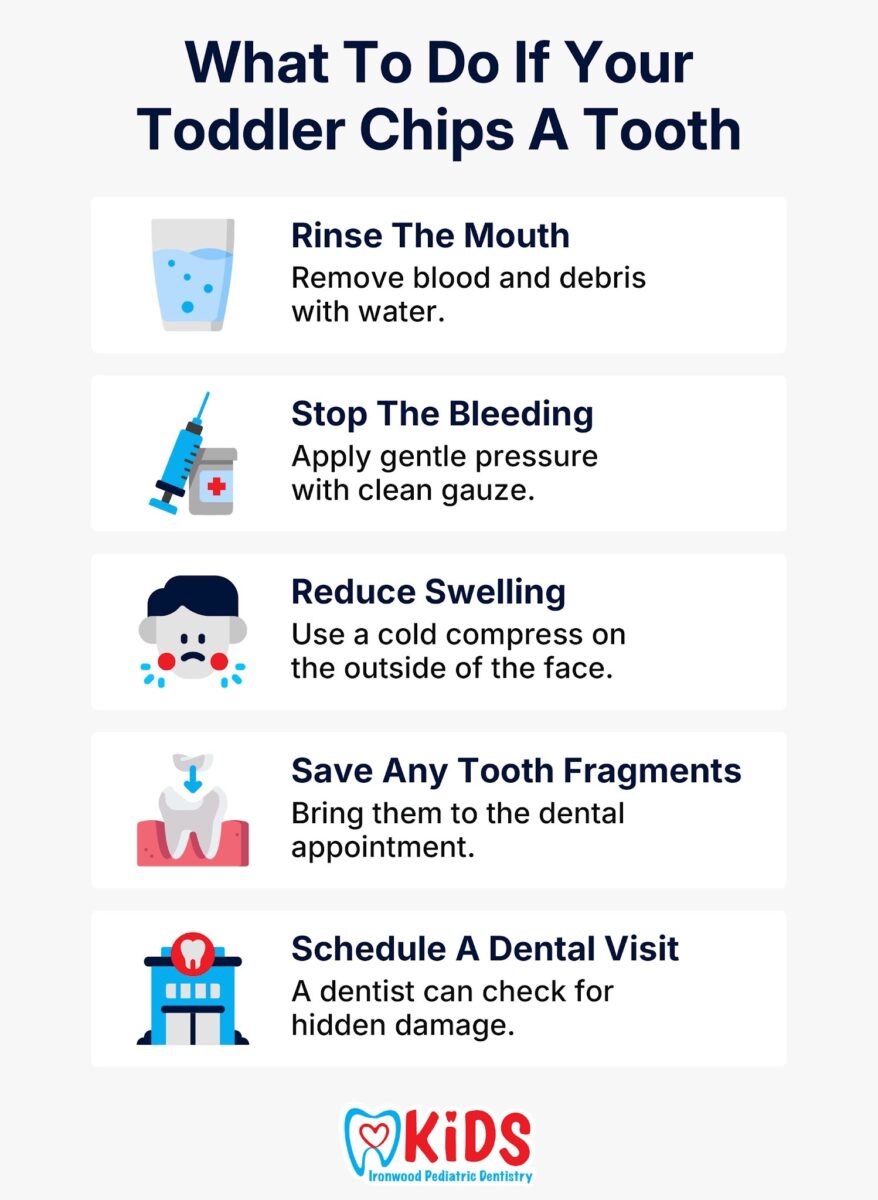
Rinse the Mouth
Have your child rinse with water if they are old enough to do so safely.
A gentle rinse helps remove blood, dirt, and debris from the injured area.
Warm water is typically sufficient.
Control Any Bleeding
Minor bleeding is common after a chipped tooth.
Apply gentle pressure with clean gauze or a clean cloth for several minutes.
Most bleeding from the lips, gums, or surrounding tissues stops quickly.
Save Any Tooth Fragments
If you locate a fragment of the chipped tooth, save it, put it in milk or water and bring it to the dental appointment.
Although baby tooth fragments are not always reattached, they can help the dentist assess the extent of the fracture.
Reduce Swelling
An ice pack or cold compress applied to the outside of the face can help reduce swelling and discomfort.
Use the cold compress in short intervals and avoid placing ice directly against the skin.
Provide Age-Appropriate Pain Relief
If your child is uncomfortable, age-appropriate pain relief may help.
Many pediatric dentists recommend medications such as:
- Children’s Tylenol
- Children’s Ibuprofen/Motrin
Always follow the dosing instructions provided by your child’s physician, pharmacist or on the back of the bottle.
Offer Soft Foods
After a chipped tooth, soft foods may be more comfortable to eat.
Consider foods such as:
- Yogurt
- Applesauce
- Mashed potatoes
- Scrambled eggs
- Smoothies
Avoid hard, crunchy, or sticky foods until the tooth has been evaluated.
When Is a Chipped Baby Tooth a Dental Emergency?
Not every chipped tooth requires an immediate emergency visit, but some situations warrant prompt care.
Contact a pediatric dentist immediately if:
- The tooth is significantly broken.
- A large portion of the tooth is missing.
- The child has severe pain.
- Bleeding does not stop.
- The tooth appears loose or displaced.
- The tooth was pushed into the gums.
- You can see a pink or red area inside the tooth.
- Swelling develops.
- Your child cannot bite normally.
- The injury involves multiple teeth.
A visible pink or red area may indicate pulp (nerve) exposure. The pulp contains nerves and blood vessels inside the tooth. When the pulp becomes exposed, treatment is often needed to prevent infection and preserve the tooth.
When Can the Injury Wait for the Next Available Appointment?
A prompt dental evaluation is still recommended, but an immediate emergency visit may not be necessary if:
- The chip is very small.
- Your child has no pain.
- There is no bleeding.
- The tooth remains stable.
- No swelling is present.
- Eating and drinking are normal.
Even when symptoms seem minor, a pediatric dentist should examine the tooth because some fractures extend deeper than they appear.
How Does a Pediatric Dentist Evaluate a Chipped Tooth?
The examination begins with a visual assessment of the tooth and surrounding tissues.
The dentist will evaluate:
- The size of the chip
- Tooth stability
- Gum health
- Signs of trauma to nearby teeth
- Bite alignment
- Symptoms such as pain or sensitivity
X-rays are often recommended after dental trauma.
An X-ray can reveal:
- Root fractures
- Damage beneath the enamel (the outer layer of the tooth)
- Injury to the pulp
- Changes around the root
- Effects on developing permanent teeth
Because baby teeth sit directly above permanent tooth buds, imaging can provide valuable information that is not visible during a clinical examination.
Understanding the Different Types of Chipped Teeth
Not all chipped teeth are the same. Here are some types of chipped teeth.
Enamel Fracture
A minor chip may affect only the enamel, which is the hard outer layer of the tooth.
These injuries are often cosmetic and may require little or no treatment.
Enamel and Dentin Fracture
A deeper chip can extend into the dentin.
Dentin lies beneath the enamel and is more sensitive.
Children with dentin exposure may experience discomfort when eating or drinking.
Pulp Exposure
A severe fracture may reach the pulp (nerve).
Because the pulp contains nerves and blood vessels, these injuries often require more extensive treatment to prevent infection and preserve oral health.
Treatment Options for a Toddler’s Chipped Tooth
Treatment depends on the extent of the fracture and the condition of the tooth.
Smoothing Sharp Edges
Small chips sometimes leave rough or sharp edges.
The dentist may simply smooth the area to prevent irritation to the lips, tongue, or cheeks.
Dental Bonding
Dental bonding is commonly used to restore chipped front teeth.
A tooth-colored composite material is applied and shaped to recreate the missing portion of the tooth.
Bonding can improve both appearance and function.
Fillings
If a chip creates a cavity-like defect, a filling may be used to protect the tooth and restore its structure.
Crowns
More significant fractures may require a crown.
Depending on the location and severity of the injury, options may include:
- Stainless steel crown
- Zirconia crown
A crown protects the remaining tooth structure and helps maintain function.
Pulp/Nerve Therapy
When trauma affects the pulp, pulp therapy may be necessary.
Common procedures include:
- Pulpotomy
- Pulpectomy
These treatments remove damaged or infected pulp tissue while helping preserve the tooth until it is naturally ready to fall out.
Tooth Extraction
Some injuries are too severe to repair.
Extraction may be necessary when:
- The fracture extends below the gum line.
- The tooth cannot be restored.
- Infection is present.
- The tooth threatens the development of the permanent tooth.
If a back (molar) tooth is removed prematurely, a space maintainer may be recommended to hold the space for the permanent tooth. For front teeth, this is less often needed, though a dentist may suggest an appliance for appearance or speech.
Can a Chipped Baby Tooth Affect Permanent Teeth?
Sometimes. A traumatic injury severe enough to chip a baby tooth may also affect the permanent tooth developing beneath it.
Potential complications include:
- Enamel defects
- Discoloration
- Delayed eruption
- Changes in tooth shape
- Developmental disturbances
The risk depends on factors such as:
- The child’s age
- The severity of the injury
- Which tooth was affected
- Whether the root sustained damage
Monitoring allows the dentist to identify and address problems as the permanent teeth develop.
What Happens if a Chipped Tooth Is Left Untreated?
Some minor chips may not cause immediate problems. However, untreated dental trauma can sometimes lead to:
- Pain
- Infection
- Tooth discoloration
- Pulp damage
- Abscess formation
- Difficulty chewing
- Additional fractures
Even when a chipped tooth appears small, professional evaluation helps ensure that deeper injuries are not overlooked.
When Should Parents Call a Pediatric Dentist?
Parents should schedule an appointment whenever a child chips a tooth. A prompt evaluation is particularly important if:
- The chip is large.
- Pain develops.
- The tooth becomes discolored.
- Swelling occurs.
- The tooth feels loose.
- A fragment broke off.
- The injury involved a significant fall or impact.
Early treatment often leads to better outcomes and may help prevent future complications.
Contact Ironwood Pediatric Dentistry If a Toddler Chips a Tooth
A toddler’s chipped tooth can range from a minor enamel chip to a more significant injury involving the dentin, pulp, or root. A professional dental evaluation is the only way to determine the extent of the damage.
At Ironwood Pediatric Dentistry, we provide comprehensive care for chipped baby teeth, dental trauma, and other childhood dental injuries. Our team can assess the injury, recommend appropriate treatment, and monitor your child’s developing permanent teeth.
If your child has a chipped tooth, contact Ironwood Pediatric Dentistry at (480) 422-4544 to schedule an appointment with a pediatric dentist today.