Tooth infection occurs when enamel decay or a tooth injury allows bacteria to reach the dental pulp of the affected tooth. When this happens, it can lead to pain.
If a tooth infection goes untreated, it can lead to more serious issues, including the need for more involved and expensive treatment, a possible tooth extraction, and other health problems.
The sooner you can recognize the signs of a child’s tooth infection, the sooner you can bring your child to a pediatric dentist for treatment, and the better your chances are of avoiding the need for root canal surgery, a dental crown, periodontal disease, or a tooth removal.
Your child’s oral health is best served when you can work as a team with the experienced, caring, local pediatric dental professionals at Ironwood Pediatric Dentistry.
Call us today at (480) 422-4544, or reach us online to schedule an appointment for your child.
Kids’ Tooth Infection Symptoms You Should Watch For
Indications of tooth infection in kids are easy to spot if you know what to look for. Here are some of the most common signs.
- Temperature sensitivity. Your child experiences a sharp sensitivity to hot and cold foods and drinks. Or your child might start avoiding certain foods because biting or chewing is painful. This is a sign that the nerves of an infected tooth are becoming exposed.
- Persistent toothache. A throbbing, persistent tooth pain is another sign of tooth decay or other enamel compromise. Your child may complain of constant pain that worsens when biting, or even keeps them up at night.
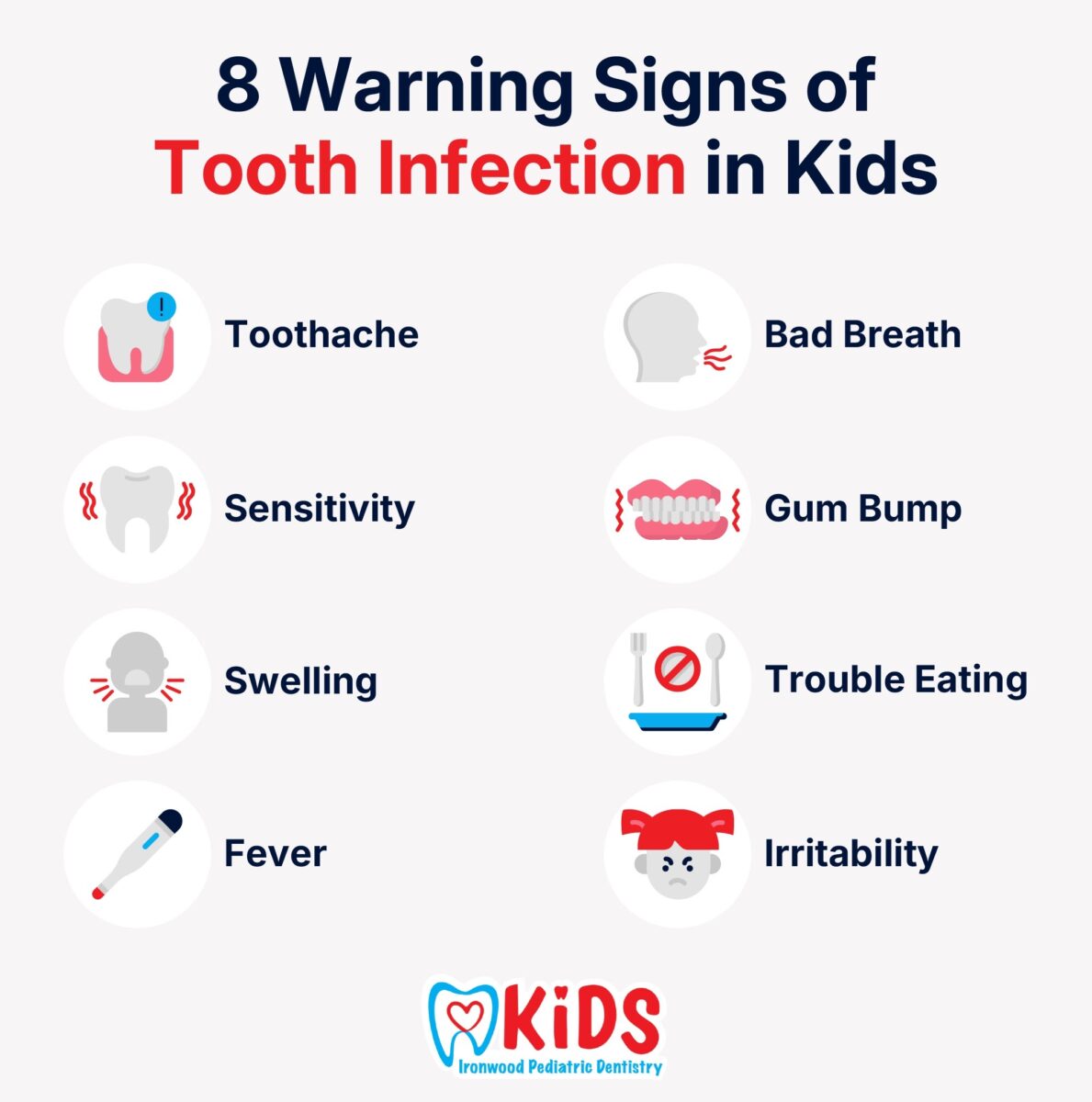
- Facial or gum swelling. An early sign of gum disease is puffiness or swelling of the gums or cheeks near an infected tooth. You might notice that one side of your child’s face looks swollen, or see a bulge on the gum by the tooth. To your child, the infected area often feels tender and warm, and the gums may look red or inflamed around the affected tooth.
- Fever. A fever is a sign that a tooth infection is spreading beyond the tooth. Your child might feel ill or unusually tired, or have swollen lymph nodes along with a toothache. Any high fever accompanied by facial swelling is a warning sign of a potentially serious infection that requires prompt dental care.
- Bad breath or a foul taste in the mouth. Bad breath (halitosis) that persists even after teeth brushing, or your child complaining about an odd, bitter taste in their mouth, can be a sign of a tooth abscess. This sign comes from bacteria in the tooth infection, which produce foul-smelling compounds or pus that drain from the gum.
- A red or pus-filled gum bump. Red or swollen gums near an infected tooth are common signs of gum disease, also called periodontal disease. You might see a pimple-like bump on your child’s gum that oozes pus (often called a “gum boil” or fistula). Any visible pus or gum abscess is a clear sign of infection and should be treated as a dental emergency.
- Trouble eating or refusal to eat. Infants and very young children may not be able to tell you about a tooth infection, but their behaviors can inform you. If your child refuses to eat or chew, then it may be because chewing hurts the infected tooth. A noticeable drop in appetite or only chewing on one side can signal that tooth pain is making it hard to eat.
- Irritability or fussiness. This is another warning sign of tooth infection that an infant or small child might display without words. An infected tooth can make your normally happy child unusually irritable, clingy, or fussy. Tooth infection pain often feels worse when lying down, so your child might have trouble sleeping and be cranky during the day.
- Tooth discoloration. A baby tooth that turns gray, dark yellow, or almost black is often a sign the pulp inside has died from decay or injury — and a dead pulp can quietly become infected. Have a pediatric dentist evaluate any gray or dark tooth promptly.
Common Causes of Tooth Infections
There are three main causes of tooth infection in children.
- Untreated cavities (tooth decay). This is the leading cause of tooth infection. Left untreated, a simple cavity can continue to worsen until the tooth enamel is breached and the dental pulp is exposed. Once this happens, bacteria can spread deep inside the tooth, reaching the nerve and causing infection.
- Dental trauma. A cracked or broken tooth can result from a fall or other impact, allowing bacteria to enter the tooth. Even a seemingly minor tooth injury can create an opening for infection.
- Gum disease or gum injury. Although we often think of gum disease as a consequence of tooth infection, the reverse can happen, too. Poor gum health can lead to a tooth infection when bacteria accumulate under the gumline, forming a gum abscess. Also, an object stuck in the surrounding gum tissue, like a popcorn hull, can sometimes cause a gum infection.
Why Early Detection Matters
Recognizing kids’ tooth infection symptoms early can be the difference between a dental filling or fluoride treatment and a considerably more invasive and expensive treatment.
Dental infections can spread rapidly in children, faster than in adults, and can easily progress from teeth to gums. A tooth infection can move into your child’s jaw, face, or bloodstream and lead to serious health complications faster than you may realize.
Also, as we have mentioned above, especially when you have a very young child, it may be up to you to recognize the early signs of tooth infection that they cannot tell you about but are experiencing.
We cannot emphasize too strongly that the sooner you spot the symptoms of a tooth infection, the simpler the treatment is likely to be. Conversely, the longer you wait to bring your child to the dentist when a tooth infection is present, the more likely it is to become severe.
You can save your child considerable oral discomfort and a possible dental emergency, and save yourself some money if you are paying out of pocket, by being alert to the signs of tooth infection and being proactive when you find them.
Tooth Infection Treatment Options
Depending on how advanced a tooth infection is, the treatment can be simple or complex.
Fundamental to the early treatment of tooth infections is scheduling regular dental check-ups and cleanings for your child. These can reduce the risk of an infection, and, as importantly, even if you miss the early signs of tooth decay or gum disease, your pediatric dentist will not.
Caught early enough, a cavity is the least severe type of tooth infection and the easiest to treat, often with a simple dental filling or dental sealants.
A cavity filling removes the decayed part of the tooth enamel. It replaces the affected area with a filling material, thereby preventing the infection from spreading further. At the same time, sealant treatment smooths the areas on teeth where cavities are most likely to form, helping prevent them from developing.
If a dental infection is more advanced, your child’s dentist has additional options. Antibiotics may be prescribed to control the bacterial infection while definitive dental treatment is arranged. A dental crown can restore a tooth whose enamel is too damaged for a simple filling.
If the infection has reached the pulp but the tooth can still be saved, your dentist may recommend a pulpotomy (sometimes called a baby root canal) for a primary tooth, or root canal treatment for a permanent tooth. If the tooth is severely infected and cannot be saved, extraction may be necessary.
Call Ironwood Pediatric Dentistry If You Suspect Your Child Has a Tooth Infection
When you work together with your child’s dentist, you help your child and yourself.
Left alone, a tooth infection can become an oral health emergency, and an oral health emergency can become a more general health emergency.
Even if you do not see any symptoms of a tooth infection in your child, call us to schedule regular checkups and cleanings, and to help you monitor your child’s oral health and development to spot potential problems, including orthodontic issues, early.
If you believe you are seeing signs of a tooth infection, do not wait: call Ironwood Pediatric Dentistry at (480) 422-4544 right away to schedule an appointment. You can also reach us through our online contact form to communicate with one of our experienced pediatric dentists at our Scottsdale dental office.