
A toddler’s tooth turning gray can be alarming for any parent. In many cases, the discoloration appears weeks after a child falls, bumps their mouth, or experiences another dental injury.
While a gray baby tooth does not always require treatment, it should never be ignored.
A color change can indicate internal bleeding, damage to the tooth pulp, or the loss of blood supply to the tooth. In some situations, the tooth may remain healthy and stable. In others, the injury can lead to infection, abscess formation, or problems affecting the developing permanent tooth.
A pediatric dentist can evaluate the tooth, determine the cause of the discoloration, and recommend the appropriate treatment.
If your child’s tooth has changed color after an injury, contact Ironwood Pediatric Dentistry at (480) 422-4544 to schedule an evaluation.
Why Does a Toddler’s Tooth Turn Gray?
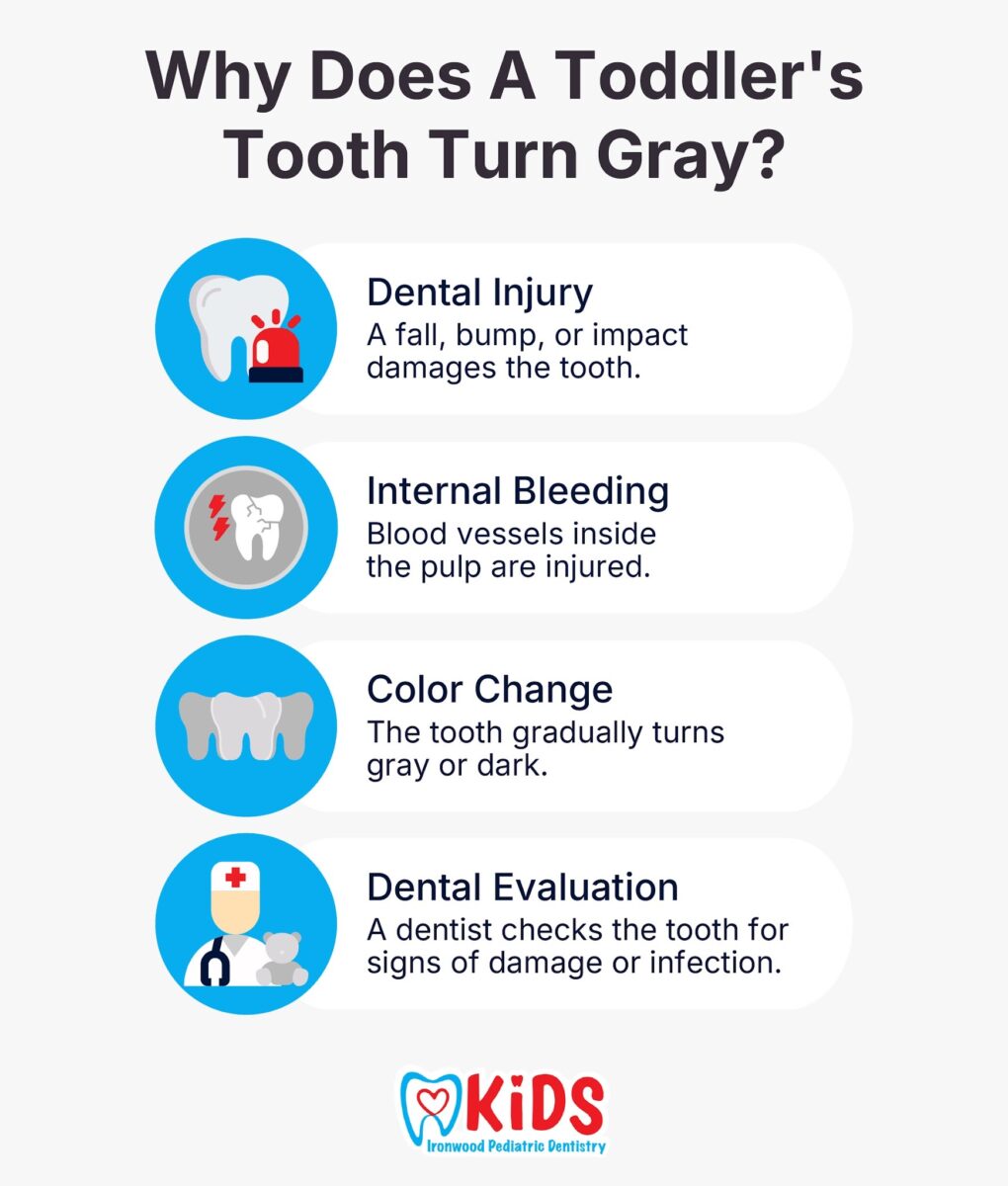
The most common reason a toddler’s tooth turns gray is dental trauma.
Young children frequently fall while running, climbing, and playing. Even a relatively minor impact can injure a baby tooth without causing obvious external damage.
Inside every tooth is a soft tissue center called the pulp. The dental pulp contains nerves, blood vessels, and connective tissue. When a tooth is traumatized, the blood vessels in the pulp can rupture and bleed.
As blood products break down within the tooth, they can cause a gray discoloration. This color change may appear shortly after the injury or develop gradually over time.
Common causes of a gray baby tooth include:
- Falling and hitting the mouth
- Collisions during play
- Sports-related injuries
- Playground accidents
- Being struck by a toy or object
- Trauma from biting hard surfaces
Parents are often surprised to discover that a toddler’s gray tooth can appear long after the original injury. In many cases, the fall or impact occurred weeks earlier.
What Happens Inside the Tooth After Trauma?
The severity of the injury determines what happens next.
Some teeth experience temporary bleeding inside the pulp but remain healthy. The blood vessels recover, and the tooth continues functioning normally.
In other cases, the trauma damages the blood supply so severely that the pulp tissue begins to die. This process is known as pulp necrosis.
A tooth affected by necrosis may become:
- Gray
- Dark gray
- Brown
- Yellowish-gray
Not every discolored tooth is a dead tooth. However, a significant color change often indicates that the pulp has been injured and requires monitoring.
Because a toddler’s tooth turning gray can have several causes, a professional examination is important.
Can a Gray Baby Tooth Return to Normal Color?
Sometimes. A gray tooth caused by internal bleeding may gradually lighten over time as the body clears the blood products trapped inside the tooth.
In some children, the discoloration fades substantially. In others, the tooth remains permanently discolored but stays healthy and symptom-free.
The appearance of the tooth alone does not determine whether treatment is necessary.
A pediatric dentist will evaluate:
- The degree of discoloration
- Whether the color is changing
- The presence of pain
- Signs of infection
- X-ray findings
- The condition of the tooth root
Many cases are managed with monitoring and follow-up visits rather than immediate treatment.
When Should Parents Be Concerned?
A gray baby tooth deserves evaluation, but certain symptoms require prompt attention.
Contact a pediatric dentist if your child develops:
- Tooth pain
- Sensitivity when chewing
- Swelling of the gums
- Facial swelling
- A pimple-like bump on the gums
- Drainage of pus
- Fever associated with dental symptoms
- Increased tooth mobility
These signs may indicate an infection or abscess.
An abscess develops when bacteria enter damaged pulp tissue and multiply inside the tooth. If left untreated, the infection can spread into the surrounding bone and soft tissues.
A fistula, which appears as a small bump on the gum, is another common sign of infection. Parents sometimes mistake it for a harmless sore, but it often indicates that an abscess is draining.
How Does a Pediatric Dentist Diagnose a Gray Tooth?
Diagnosis begins with a clinical examination.
The dentist will ask questions about:
- Recent falls
- Previous dental trauma
- When the color change appeared
- Pain or discomfort
- Changes in eating habits
A thorough examination of the tooth and surrounding tissues follows.
In most cases, dental X-rays are also recommended.
An X-ray or radiograph allows the dentist to evaluate:
- Root development
- Bone health
- Signs of infection
- Damage to the tooth pulp
- Changes around the root tip
- The position of the developing permanent tooth
Because baby teeth sit directly above permanent teeth, imaging plays an important role in determining whether the injury may affect future tooth development.
How Trauma to Baby Teeth Can Affect Permanent Teeth
Many parents assume that a damaged baby tooth is not a major concern because it will eventually fall out.
However, primary teeth serve important functions during childhood.
A traumatic injury can occasionally affect the permanent tooth developing beneath the injured baby tooth.
Potential complications include:
- Enamel defects
- White or yellow discoloration
- Abnormal tooth shape
- Delayed eruption
- Disturbances in root development
The younger the child is at the time of injury, the greater the possibility that trauma may affect the developing permanent teeth.
Monitoring helps identify these issues early and allows appropriate treatment planning as the child grows.
Treatment Options for a Toddler’s Gray Tooth
Treatment depends on the condition of the tooth and the health of the pulp.
Monitoring
Many gray baby teeth require only observation.
If the tooth is stable, symptom-free, and shows no evidence of infection, the dentist may recommend periodic monitoring.
Follow-up visits typically include:
- Clinical examinations
- Repeat X-rays
- Evaluation of color changes
- Assessment of root development
Pulp Therapy
When the pulp has been damaged, but the tooth can still be preserved, pulp therapy may be recommended.
Treatment options include:
- Pulpotomy
- Pulpectomy
A pulpotomy removes damaged tissue from the crown portion of the tooth while preserving healthy tissue within the roots.
A pulpectomy removes infected pulp tissue throughout the tooth and root canals.
These procedures help keep the baby tooth in place until it is naturally ready to fall out.
Tooth Extraction
Extraction may be necessary when:
- Infection is severe.
- The tooth cannot be restored.
- Extensive root damage exists.
- The tooth threatens the development of the developing permanent tooth.
A tooth extraction removes the source of infection and protects surrounding structures.
Your pediatric dentist can explain whether extraction is the best option based on your child’s specific situation.
How Long Does Recovery Take?
Recovery varies depending on the extent of the injury.
Some children experience only temporary discoloration that improves over several months.
Others require ongoing monitoring throughout childhood.
If treatment such as pulp therapy or extraction is necessary, recovery is usually straightforward, and most children return to normal activities quickly.
The key is obtaining an accurate diagnosis early rather than waiting for symptoms to worsen.
When to Schedule an Appointment
Any unexplained color change deserves professional evaluation.
You should schedule an appointment if:
- Your toddler’s tooth is turning gray.
- A baby tooth is turning gray after a fall.
- Your child recently experienced dental trauma.
- You notice swelling or pain.
- A gray tooth is becoming darker over time.
Early evaluation can help identify infection, protect developing permanent teeth, and determine whether treatment is necessary.
Talk to an Ironwood Pediatric Dentist About a Toddler’s Gray Tooth
A toddler’s tooth turning gray is often the result of trauma to the tooth pulp, but the severity of the injury can vary significantly from one child to another. While some gray baby teeth recover without treatment, others require monitoring, pulp therapy, or extraction to prevent complications.
At Ironwood Pediatric Dentistry, our team regularly evaluates children for dental trauma, tooth discoloration, and injuries affecting both baby and permanent teeth. We can determine the cause of the color change, assess your child’s tooth health, and recommend the most appropriate treatment plan.
Call Ironwood Pediatric Dentistry at (480) 422-4544 to schedule an appointment with a pediatric dentist today.