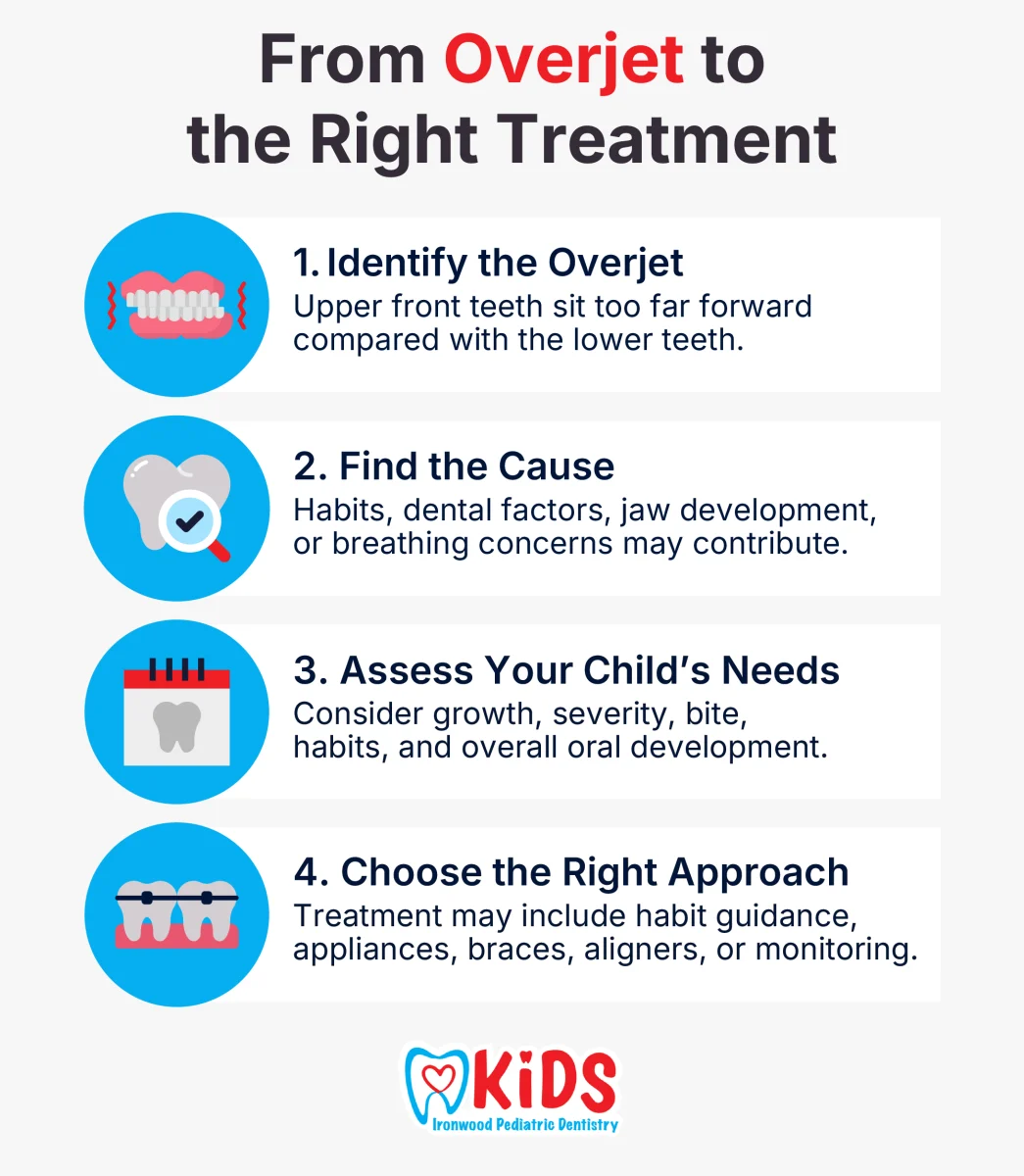
Overjet is the horizontal distance between the upper and lower front teeth. A small amount is normal; increased overjet means the upper front teeth project farther forward than expected. It differs from overbite, which describes vertical overlap.
Increased overjet can reflect tooth position, the relationship between the upper and lower jaws, or both. A pediatric dental or orthodontic exam can identify the cause and whether treatment is needed.
A normal overjet is about 2 millimeters. Overjet can become a problem when the upper teeth are too far forward relative to the lower teeth, causing them to protrude outward or “stick out.”
A severe overjet can be 8 to 10 millimeters or more. This is an oral health condition also commonly known as “buck teeth.”
Whether increased overjet changes as a child grows depends on the cause, severity, and oral habits. Some children benefit from monitoring or habit support; others need orthodontic treatment such as appliances, braces, or clear aligners.
If you believe your child is suffering from overjet teeth, the pediatric dentists and orthodontists at Ironwood Pediatric Dentistry can help. Call us at (480) 422-4544 or contact us online to schedule an appointment at our Scottsdale office to learn about overjet treatments.
Overjet Teeth vs. Overbite
Overjet measures horizontal projection, while overbite measures how much the upper front teeth overlap the lower front teeth vertically. Both can fall within a normal range or be excessive, and a child can have increased overjet and a deep overbite together.
Causes of Overjet Teeth in Children
An overjet can result from natural causes or habits.
Habitual Causes of Overjet in Children
Oral habits and breathing or tongue-posture concerns can contribute to increased overjet, alongside inherited jaw and tooth relationships. Factors to discuss include:
- Thumb-sucking habits
- Prolonged pacifier use
- Tongue thrusting
- Biting on or sucking on the lips
- Mouth breathing
Prolonged sucking can influence tooth position, while a persistent forward-tongue-rest posture and impaired nasal breathing may also contribute. Mouth breathing is not simply a bad habit; persistent symptoms may need medical assessment.
If a sucking habit contributes to increased overjet, helping the child stop is an important part of treatment and can reduce the risk of relapse. Whether orthodontics is also needed depends on the remaining tooth and jaw relationships.
Natural Causes of Overjet
Natural causes of overjet can be genetic, such as a smaller or underdeveloped lower jawbone or a more forward-positioned upper jaw. Other natural contributors to overjet include early loss of baby teeth, delayed eruption of adult teeth, or dental crowding or spacing issues.
Fixing a genetic overjet is more complicated than a habit-based overjet and requires correcting your child’s entire bite by repositioning how the teeth fit within the jaw alignment.
Overjet Symptoms
Common signs of overjet include:
- Upper front teeth that visibly stick out in front of the lower teeth
- Difficulty closing the lips over the front teeth
- A bad bite that creates difficulty biting into foods
- Mouth breathing or jaw strain
Why Overjet Matters
Mild overjet may be mostly cosmetic in its effects. But more severe overjet cases can lead to significant problems for your child, including:
- Increased risk of dental injury, especially to protruding front teeth
- Speech challenges, such as lisps
- Chewing difficulty and jaw pain
- Jaw strain or bite imbalance
- Self‑consciousness about appearance, especially in older children and teens
- Excessive wear on back teeth
When Should You Consider an Orthodontic Evaluation for Your Child?
The American Association of Orthodontists recommends a first checkup around age 7. The goal of this exam is to monitor growth at an early age and identify the optimal timing for orthodontic treatment if it becomes necessary later.
This early evaluation can help determine:
- Whether an overjet condition is developing
- Whether the overjet is dental, skeletal, or habit‑related
- Whether airway or breathing concerns are contributing to overjet
- Whether growth‑guiding appliances might be beneficial to treat overjet
- Whether waiting is the best approach
Treatment Options for Overjet in Children
The right treatment option for your child’s overjet condition depends on its cause and its severity. Below, we outline some of the most common treatment options for correcting overjet in children.
Habit Guidance
As mentioned above, bad oral habits left uncorrected can undermine even orthodontic treatment over time. Stopping thumb sucking, improving tongue posture, or addressing lip habits can prevent worsening overjet and may promote proper position and alignment.
Airway Evaluation
If mouth breathing or airway obstruction is present, then collaboration with pediatricians or ear, nose, and throat (ENT) specialists can support better facial growth and oral posture.
Functional Appliances
These removable or fixed devices help guide jaw growth in children who are still developing. They may be used when the lower jaw sits too far back.
Braces
Traditional metal or clear braces are effective in treating many oral health problems, including horizontal overlap issues such as overjet. They can align teeth, correct bite relationships, and work with other appliances when more precise control is needed.
Braces may be sufficient for some dental overjet cases. When jaw relationships also contribute, an orthodontist may consider elastics, a functional appliance, headgear, or another approach based on growth and the specific diagnosis; severity alone does not determine the appliance.
Clear Aligners
Clear aligners like Invisalign can address many mild-to-moderate overjet cases, especially when habits are under control, and your child is ready for a removable system. For moderate or excessive overjet, traditional metal braces may still be the preferred treatment option.
Other Tools and Measures
Elastics, expansion, or other appliances may help treat overjet, depending on your child’s anatomy and growth. In cases involving severe teeth crowding, tooth extraction may be required. For extreme skeletal overjet in older children whose jaws are no longer growing, orthognathic surgery may be needed.
No single option is the best treatment to fix overjet for every child. What matters is matching the right approach to your child’s unique treatment needs.
How Long Does Overjet Treatment Take?
Just as there is no “one-size-fits-all” treatment for all forms of overjet, the duration of treatment can vary considerably depending on the treatment method and the nature of the overjet. This means that correcting an overjet can take from a few months to a few years.
Ironwood Pediatric Dentistry’s Individualized Approach to Overjet Treatment
At Ironwood, we know that every child’s smile tells a different story. We take the time to understand:
- Your child’s growth pattern
- Their habits and airway health
- Their comfort level and readiness
- Your family’s goals
Our team provides personalized guidance for overjet treatment. Whether your child needs early intervention or simply monitoring, we will guide you in making confident, informed decisions.
Schedule an Evaluation
If you have noticed that your child has protruding teeth, or if you are seeking a professional opinion, Ironwood Pediatric Dentistry is here to help. A friendly, low‑pressure evaluation can give you clarity about what’s happening now and what to expect as your child grows.
We’d love to meet your family and support your child’s healthiest, happiest smile and overall oral health. Call Ironwood Pediatric Dentistry today at (480) 422-4544 or use our online contact form to schedule an appointment.