Knowing when to see an orthodontist for your child is one of the most common questions parents ask us. The American Association of Orthodontists recommends that your child’s first orthodontist visit happen by age seven—even if no treatment is needed yet.
At age seven, most kids have a mix of baby and erupting permanent teeth, which gives an orthodontist the clearest early picture of how your child’s bite, jaw, and smile are developing.
At Ironwood Pediatric Dentistry, our Scottsdale pediatric dentists and orthodontists are trained and experienced in treating children and advising their parents on the full range of orthodontic treatment options.
Below, we cover when a child should see an orthodontist, the signs to watch for, how orthodontic issues affect children, and what your child’s first orthodontist visit age means for their long-term oral and emotional health.
Why Choose Ironwood Pediatric Dentistry for Your Child’s Orthodontic Treatment Needs?
At Ironwood Pediatric Dentistry, our dental professionals specialize in the early identification and treatment of dental and orthodontic issues that affect kids, from the earliest stages of growth through adolescence and the teen years. If orthodontics, such as braces or Invisalign, is right for your child’s teeth, we can work with you to develop an effective and affordable treatment plan.
To speak with one of our orthodontic specialists, call our office at (480) 422-4544, or use our online contact form to schedule an appointment.
Signs Your Child May Need an Orthodontic Evaluation
You don’t have to wait until age seven to bring your child in if something looks or feels off. Some orthodontic issues are easier to catch—and easier to treat—when you act on them early. Watch for the following signs:
- Crossbites, underbites, or open bites: When your child’s upper and lower teeth don’t fit together properly, it can affect chewing, speech, and jaw growth.
- Crowded or overlapping teeth: Permanent teeth coming in crooked or without enough room to fit.
- Abnormal eruption patterns: Teeth coming in late, out of order, or in unusual positions.
- Persistent thumb sucking: Especially past age four or five, this can push the front teeth forward and affect jaw development.
- Mouth breathing or frequent snoring: These can be signs of an airway or palate issue that an orthodontist can help evaluate.
- Difficulty chewing or biting: If your child avoids certain foods or chews on only one side, an orthodontic issue may be the cause.
- Jaw clicking, popping, or pain: Especially when chewing or opening the mouth wide.
- Speech difficulties: Particularly with sounds that require precise tongue placement against the teeth.
If you notice any of these, it’s worth scheduling an orthodontic evaluation—even if your child is younger than seven.
When Should Your Child See an Orthodontist? Why Early Evaluation Matters
When deciding when to see an orthodontist for your child, early evaluation is the most important factor. The American Association of Orthodontists recommends that your child’s first orthodontic visit happen by age seven, even if treatment is not necessary right away. There are several reasons for this.
Early Detection of Developing Problems
The first orthodontist visit at age seven works well because this is when most kids have a mix of baby and erupting permanent teeth. This is a good time for an orthodontist to spot emerging yet subtle problems with jaw growth, bite alignment, and emerging teeth that a pediatric dentist might not yet notice. Specific issues that an experienced orthodontist will look for include:
- Crossbites
- Underbites
- Teeth crowding
- Abnormal eruption patterns
Benefits of Early Intervention
By identifying potential orthodontic problems early, your child’s orthodontist can develop a clearer picture of proactive steps to take, such as interceptive treatment. This can help guide jaw growth while the jawbones are still growing and are more adaptable to adjustment.
Also, early treatment can reduce the likelihood of needing more serious or invasive treatment in adolescence or adulthood.
Early orthodontic monitoring can also help reduce the risks posed by bad oral habits, such as persistent thumb sucking or mouth breathing, which can lead to protruding front teeth or affect upper and lower jaw development.
Not all early orthodontic evaluations will require starting orthodontic treatment. But the sooner your orthodontist has the opportunity to find potential problems at their emergent stages, the better the chance that any required treatment can be kept to the minimum necessary and for the shortest possible duration.
For example, palatal expansion treatment is a much better option for young children than for adolescents and can reduce the need for later tooth extractions to avoid impacted teeth.
How Orthodontic Issues Affect Children
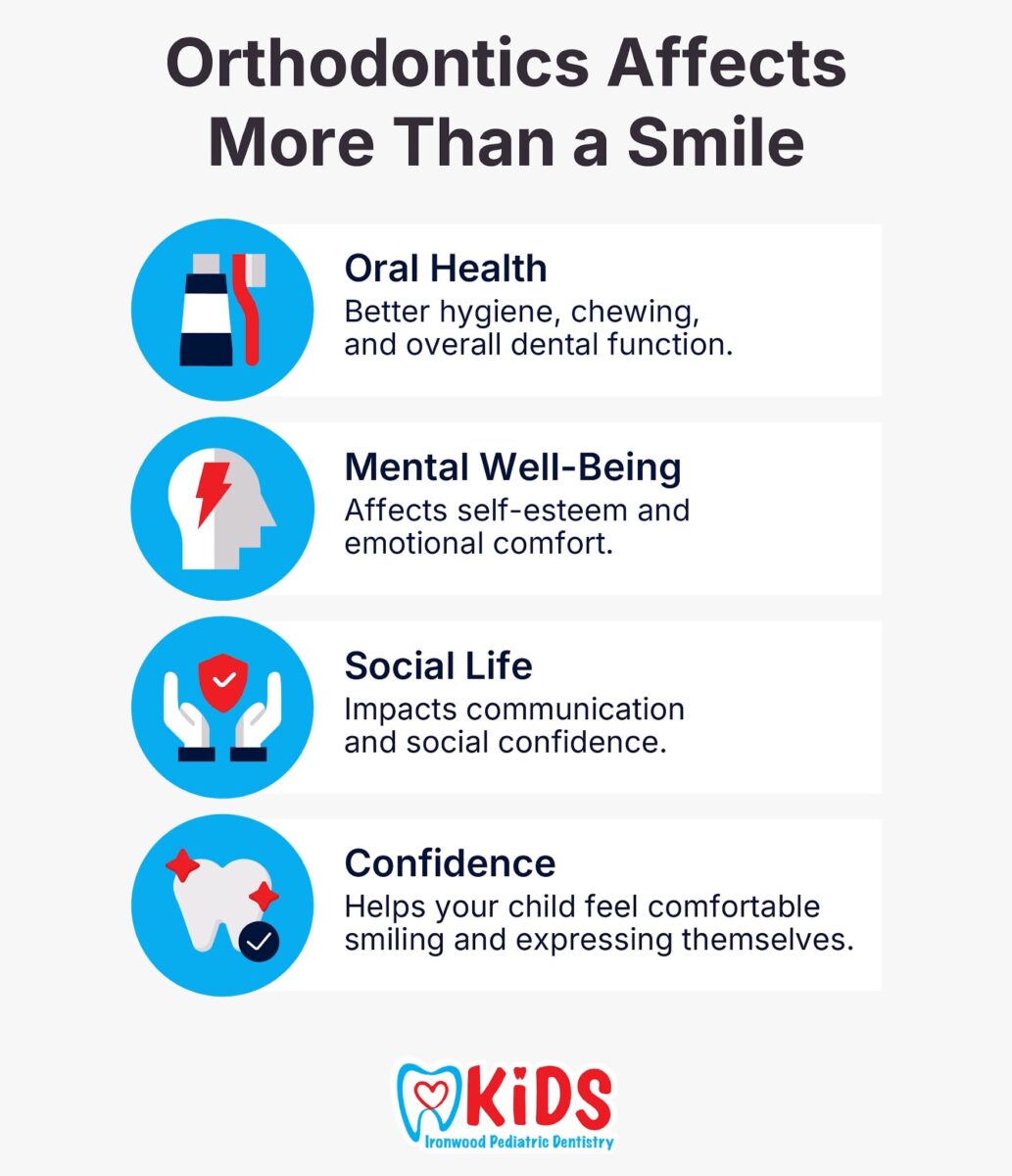
We can break down orthodontic issues that children experience into four parts:
- Oral and physical health effects
- Psychosocial and emotional effects
- Effects on the child’s mental well-being during treatment
- Long-term benefits of addressing orthodontic issues
Let’s take a closer look at each of these below.
Oral and Physical Health Effects
This may be the issue that is most visible to you as a parent. Especially in early childhood, orthodontic problems that are left untreated can interfere with normal oral functions like:
- Chewing and digestion problems: Misaligned teeth can make it harder for your child to chew properly; this can negatively affect nutrition and digestion.
- Speech development difficulties: Some bite problems and jaw misalignment issues can lead to childhood speech difficulties, especially when making sounds that require precise tongue placement.
- Oral hygiene challenges: Crowded or overlapping teeth are harder to clean, which increases the risk of cavities, gum inflammation, and plaque buildup.
- Jaw discomfort and excessive enamel wear: Misaligned teeth can put uneven pressure on the teeth and jaw joints, leading to jaw pain, headaches, or premature tooth wear over time.
These issues alone are enough to warrant seeing an orthodontist, especially at a young age. The oral health benefits of early orthodontic treatment can pay early dividends.
Psychosocial and Emotional Effects
Orthodontic issues can strongly affect how your child feels about themselves. These issues can be harder to spot than oral and physical health effects, but they can still have a powerful impact on childhood development.
- Low self-esteem and body image: Visible dental problems, such as crooked teeth, can make your child feel self-conscious about smiling or speaking.
- Awkwardness in social interactions: Studies show that children with noticeable malocclusions can worry about, or even experience, teasing, peer judgment, or trouble with social acceptance, especially during later childhood years.
- Quality of life: Orthodontic problems can significantly affect your child’s emotional well-being, self-image, and comfort in school and social settings.
If your child is in school and has teeth alignment problems, the social and emotional effects can be powerful — and often invisible to parents. Left unaddressed, these effects can shape your child’s self-image and social confidence well into adulthood.
Impact on Mental Well-Being During Treatment
For children who begin orthodontic care, the treatment itself can have short-term physical and emotional effects.
- Temporary discomfort or frustration: Braces in particular can cause soreness in your child’s mouth, difficulty chewing certain foods, and self-consciousness early in treatment.
- Adjustment period: Your child’s oral health-related quality of life may temporarily worsen during active treatment, but it usually improves after orthodontic treatment is completed.
- Family and social context: Some research notes that orthodontic treatment can influence family routines and your child’s daily habits.
The Long-Term Benefits of Addressing Orthodontic Issues
In many ways, early childhood years are formative for a lifetime. This is true in the development of self-esteem and self-confidence. Children who feel self-conscious and uncomfortable about their smile start off at a disadvantage that, if it goes uncorrected, can make socializing harder and lead to a lower sense of self-image that can persist into adulthood.
Orthodontic treatment can avoid these negative developments before they take hold and give your child the following long-term advantages that come with healthy teeth and a healthy smile:
- Better oral health and improved oral hygiene
- Improved self-confidence and social comfort
- Better facial and dental aesthetics
- A better quality of life in emotional development and social interactions
Call Ironwood Pediatric Dentistry for Your Child’s Orthodontic Evaluation
If your child is at or nearing age seven, this is the best time to decide when to schedule an orthodontic evaluation with an orthodontist near you. Age seven is the right time for your child’s first orthodontist visit to identify and treat oral health issues such as jaw alignment problems, thumb sucking, an irregular bite, or even facial imbalance.
A beautiful smile can do wonders for your child’s development in both the short term and long term. We offer the full range of orthodontic treatment options, including traditional metal braces, lingual and ceramic braces, and Invisalign clear aligners.
To schedule your child’s first orthodontic exam, call Ironwood Pediatric Dentistry at (480) 422-4544, or schedule it online.